

 United Kingdom
 Ireland
 Canada
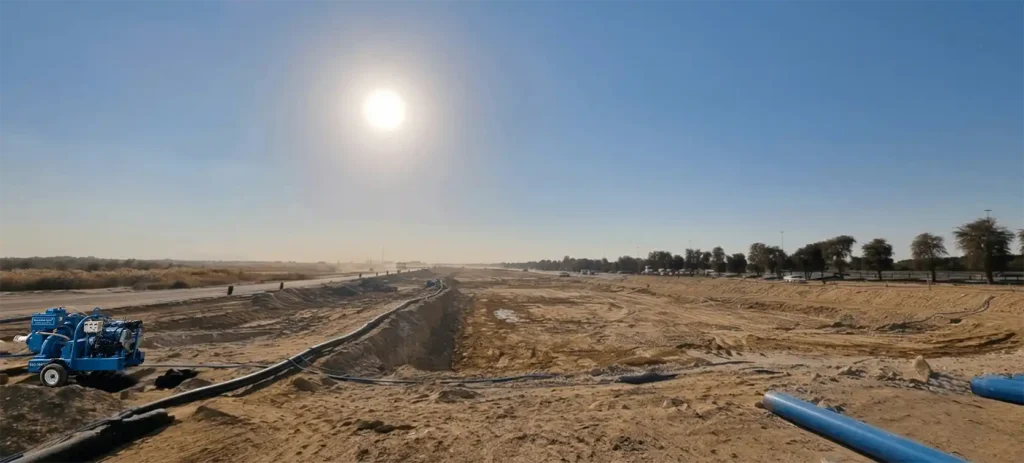
Dewatering in the UAE during summer is a different operational challenge to the rest of the year. Extreme heat, shallow water tables, and highly saline groundwater combine to increase the volume of water a site must manage and shorten the margin for error if a pump goes down. On basement excavations, coastal developments, and infrastructure and utility projects across the UAE, this is the period when dewatering systems are tested hardest.
Sites that plan for these conditions, rather than react to them, keep excavations dry, hold their programme, and avoid the unplanned downtime that summer heat can cause.
Khansaheb Sykes designs and operates dewatering systems for these conditions year-round. As well as back them up by 24/7 technical support, rapid mobilisation, and engineering expertise across our nationwide UAE depot network.
Why Does Summer Heat Increase Dewatering Demand?
Summer heat increases the operational demands on a dewatering system. Sustained high temperatures mean higher continuous pump output is needed to hold stable drawdown levels, with far less tolerance for any interruption to pumping than during cooler months.
This creates three primary site risks during summer months:
| Higher infiltration rates | Summer conditions increase the volume of groundwater that must be continuously removed, particularly on shallow, high-permeability sites common to UAE coastal and low-lying developments. Deep well systems provide the sustained capacity this demands, with standby pumps in place to cover any single-unit failure. |
| Sustained 24/7 demand | Any interruption to continuous dewatering allows rapid groundwater recovery, shortening the window before excavation stability is compromised, a particular risk on deep basement excavations and infrastructure works. Submersible pumps, built for continuous-duty operation, hold this demand, with standby units on site as contingency and generator backup securing power continuity. |
| Wellpoint vacuum integrity | Soil shrinkage in extended heat affects seal integrity at wellpoint connections, reducing system vacuum and drawdown depth. Wellpoint systems are engineered to maintain this drawdown, checked through daily vacuum monitoring across the header. |
Addressing these conditions requires correct equipment selection, contingency planning, and ongoing monitoring of vacuum levels. As well as pump duty cycles, built in from the start rather than added once groundwater has entered the excavation.
| Related Reading: |
|---|
Selecting the Right Dewatering Method for Summer
Method selection depends on three site-specific factors, assessed before specifying equipment:
- Excavation depth and geometry
- Soil permeability and formation type
- Groundwater table level and recharge rate
Once these are established, the appropriate method, or combination of methods, can be sized correctly for peak summer demand rather than average conditions.
Khansaheb Sykes carries out pumping tests and full site assessments to confirm the correct method and equipment specification before mobilisation.
| Related Reading: |
|---|
Dewatering Equipment for Summer Conditions
Equipment is specified against the site itself, not a standard package:
- Wellpoint systems: suited to shallow excavations such as basement works and utility trenches, where consistent vacuum integrity is critical to holding drawdown.
- Deep well systems: specified for larger infrastructure and coastal projects, where excavation depth and sustained volume exceed wellpoint capacity.
- Hydraulic submersibles: fully submerged within the excavation itself, suited to confined or flooded working areas where a surface-mounted pump isn’t practical.
Outcomes of Correct Summer Planning
➣ Excavation floors remain dry and accessible at the required formation level throughout peak summer.
➣ Below-ground structural works proceed without groundwater-related stoppages or rework.
➣ Shoring systems are not exposed to unanticipated hydrostatic load from inadequate drawdown.
➣ Foundation pours, pipe laying, and below-ground installations proceed on programme.
These outcomes hold on live UAE projects, documented in the case studies below.
| Related Case Studies: |
|---|
Talk to Our Team About Your Dewatering Requirements
| Khansaheb Sykes carries out pumping tests and full dewatering assessments across the UAE, with engineering teams and equipment on rapid standby from depots in Sharjah, Dubai, Abu Dhabi, and Ruwais. Speak to our team today on 00971 800 79537 to discuss your project requirements or enquire now |
|---|
FAQs
Why does UAE summer increase the demands on dewatering systems?
Summer heat increases the operational demand on dewatering systems, requiring higher continuous pump output to hold stable drawdown. This matters most in low-lying and coastal areas of the UAE, where the water table already sits close to the surface and pumps have less margin before drawdown is lost.
What dewatering methods are suitable for UAE summer conditions?
Wellpoint dewatering, deep well dewatering, and hydraulic submersible pump installations are all effective when correctly specified, from basement excavations to coastal and infrastructure projects. The right method depends on excavation depth, soil permeability, and water table level. Khansaheb Sykes assesses each site and runs pumping tests before recommending a solution.
Does Khansaheb Sykes provide support during summer for active dewatering sites?
Yes. Khansaheb Sykes operates 24/7 with depots across the UAE in Sharjah, Dubai, Abu Dhabi, and Ruwais, providing rapid mobilisation, technical support, and site assessments year-round, including through peak summer operations.


