 United Kingdom
 Ireland
 The Netherlands
 Belgium
 Italy
Italy Germany
 Luxembourg
 Switzerland
 Canada
 Middle East
 Saudi Arabia
 Yemen
Yemen Bahrain
 Oman
Oman Kuwait
 Qatar
QatarFine-grained, backfilled ground is one of the more difficult conditions to dewater. Fines migration and over-bleed can undermine an otherwise well-sized pumping system if the ground isn’t accounted for in the design. Getting it right calls for filtration matched to the soil, and a pumping method matched to the ground – not a single fixed setup applied across the whole site. On this project, that ground-specific approach has addressed those exact ground challenges, with works progressing well and on schedule.
What Is Fines Migration, and Why Does It Matter?
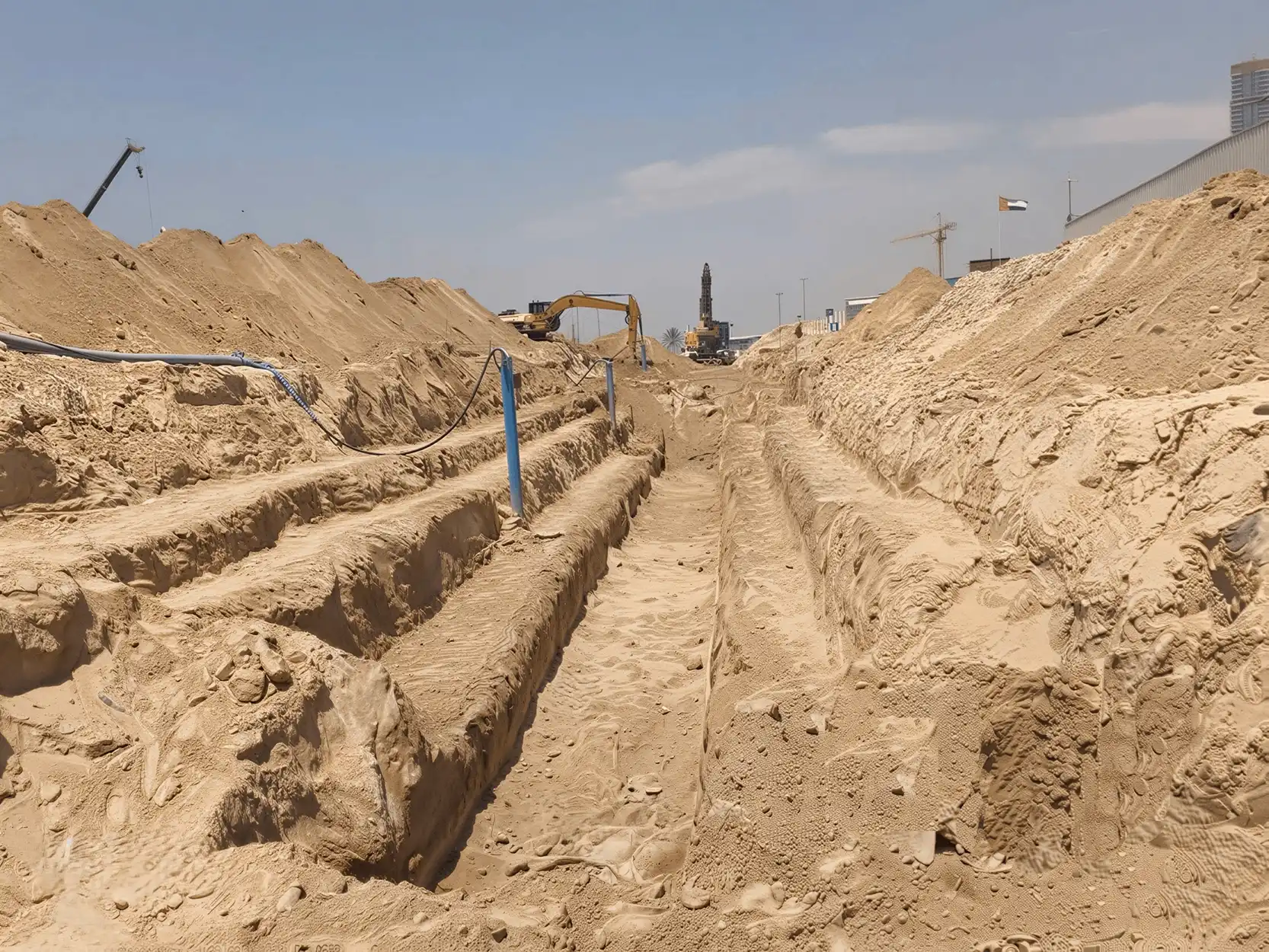
Fines migration is the movement of fine soil particles – silt and fine sand – into a dewatering system as groundwater is drawn towards a well. Left unmanaged, it is a substantial challenge to dewatering operations. Properly graded filter materials and filter screens, matched to the site’s specific soil, are what keep those particles out of the system while still allowing water through.
What Causes Over-Bleed in Clayey Ground?
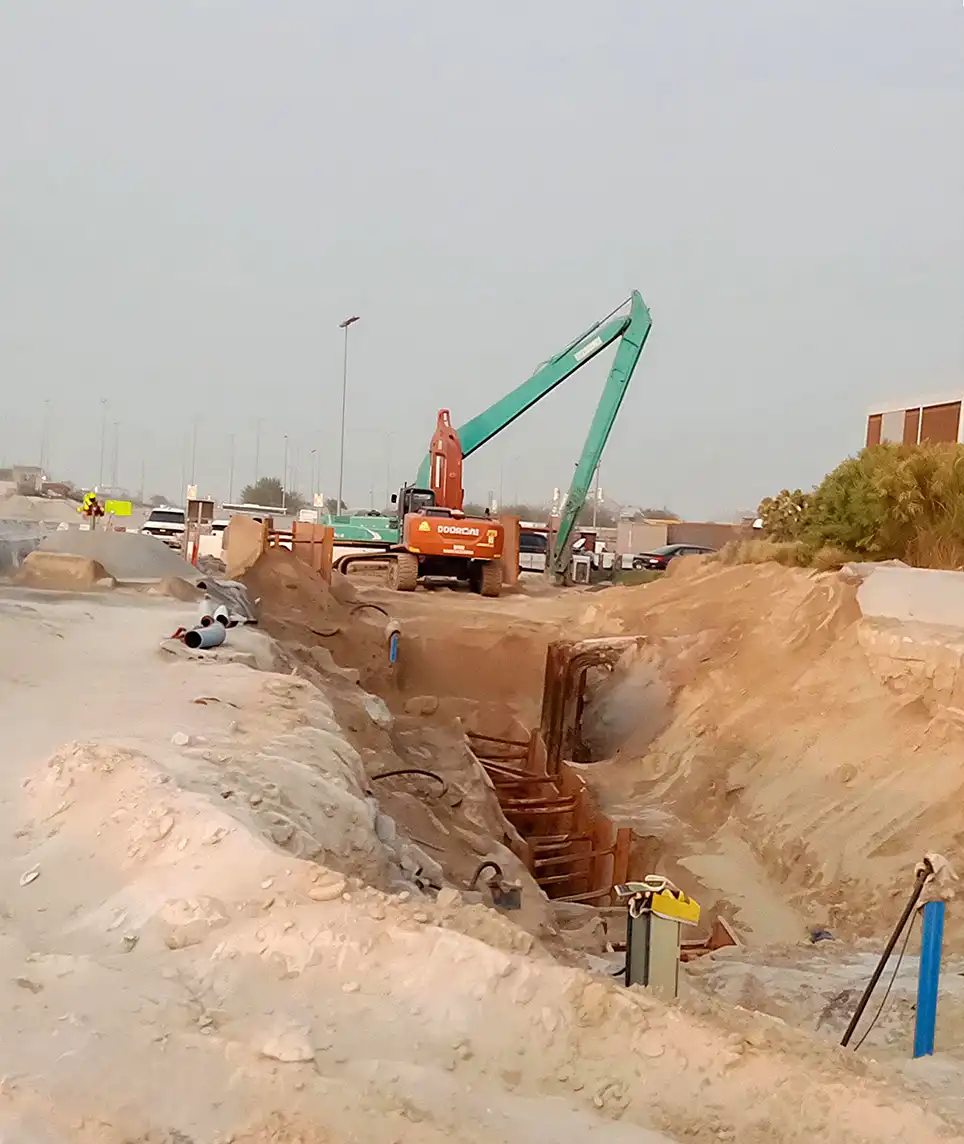
Over-bleed occurs where clayey strata continue to release water even after the surrounding ground has been drawn down. On sites with mixed stratigraphy – sand and silt layers alongside clay – it’s a direct consequence of the underlying ground itself, and it can make a single, uniform pumping setup unreliable across a site that behaves differently from one area to the next.
Deep well and Sump Pumping: A Combined Approach
Deep well systems provide sustained drawdown through a network of wells; sump pumping handles residual water closer to the surface. Combining the two is a standard response where a site presents more than one dewatering challenge at once. The same combined approach was central to our large-scale dewatering programme at Fronds & Spine, Jebel Ali, where mixed coastal stratigraphy called for deep well and sump pumping to work together rather than either method alone.
Equipment Matched to Ground Conditions
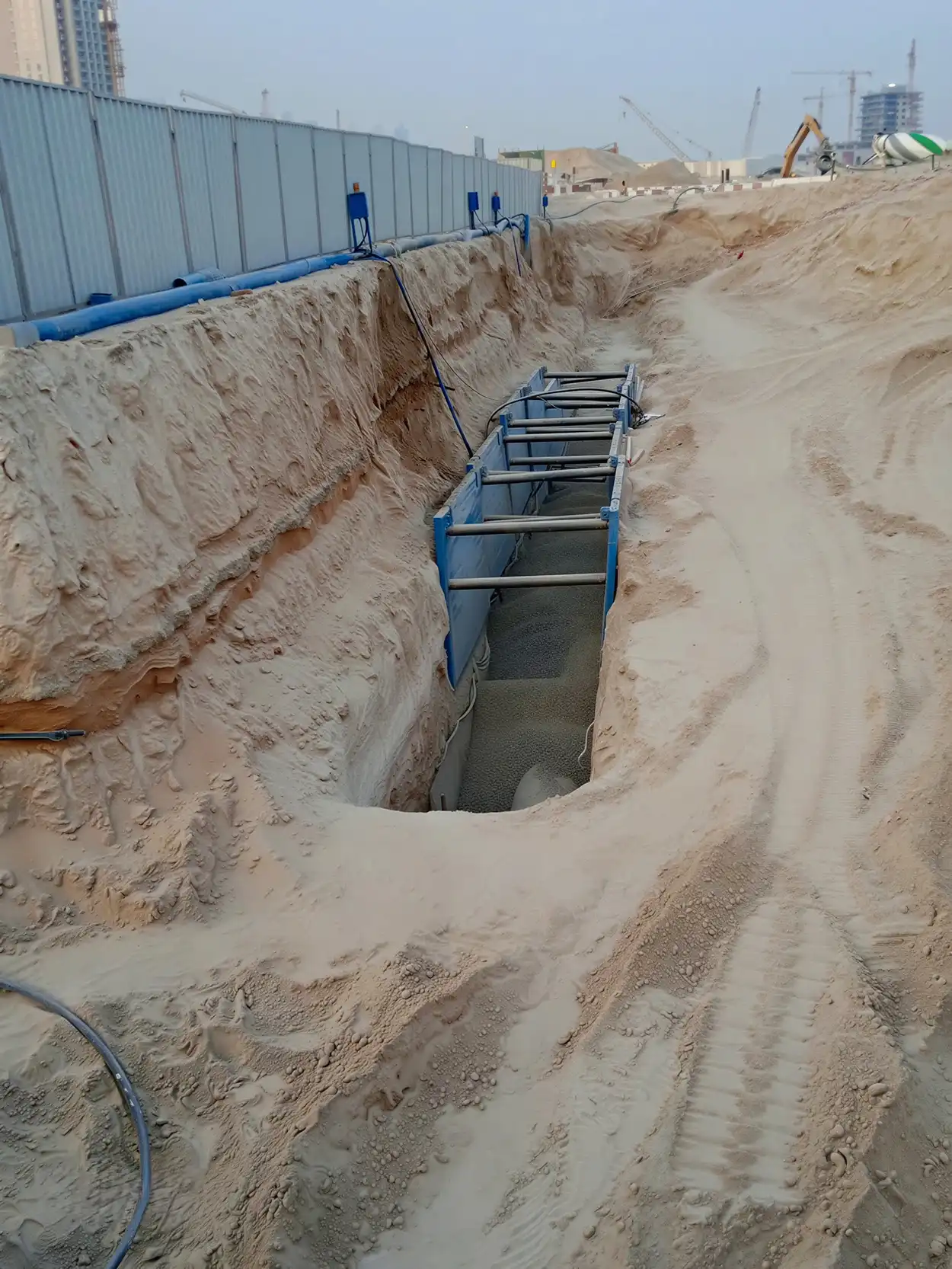
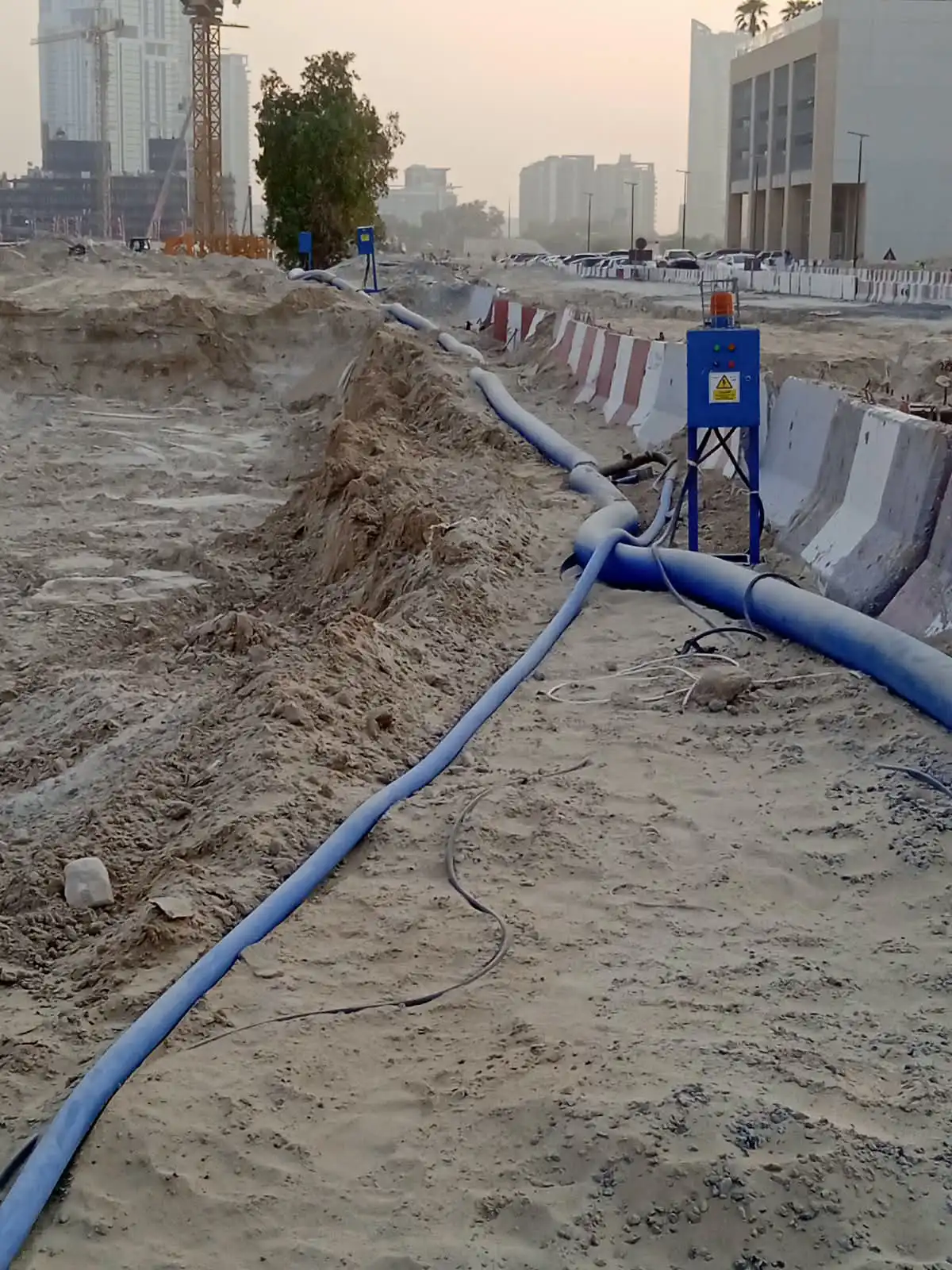
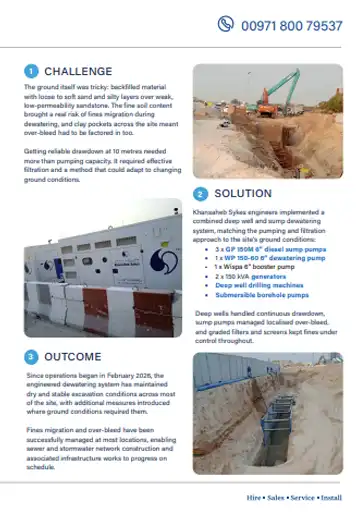
Matching equipment to the ground rather than applying one fixed setup is what this looks like in practice. On a recent project at Ras Al Khor, Dubai, a 10-meter excavation through backfilled sand, silty layers, and weak sandstone bedrock brought exactly the fines migration and over-bleed challenges above. As of August 2026, with the project ongoing, the equipment below represents the full deployment for this project:
- Deep well Drilling Machines – Our deep well drilling rigs installed the well network across the site.
- 150 kVA Generators – 2 x 150 kVA generators ran the pumping network independently of site power, keeping drawdown continuous across the well network, where any interruption risked recharge from the shallow water table.
- Submersible Borehole Pumps – Our submersible borehole units maintained continuous drawdown across the well network.
Sump pumps handled the water the well network alone couldn’t reach – residual inflow at the excavation base and localised over-bleed from clayey strata:

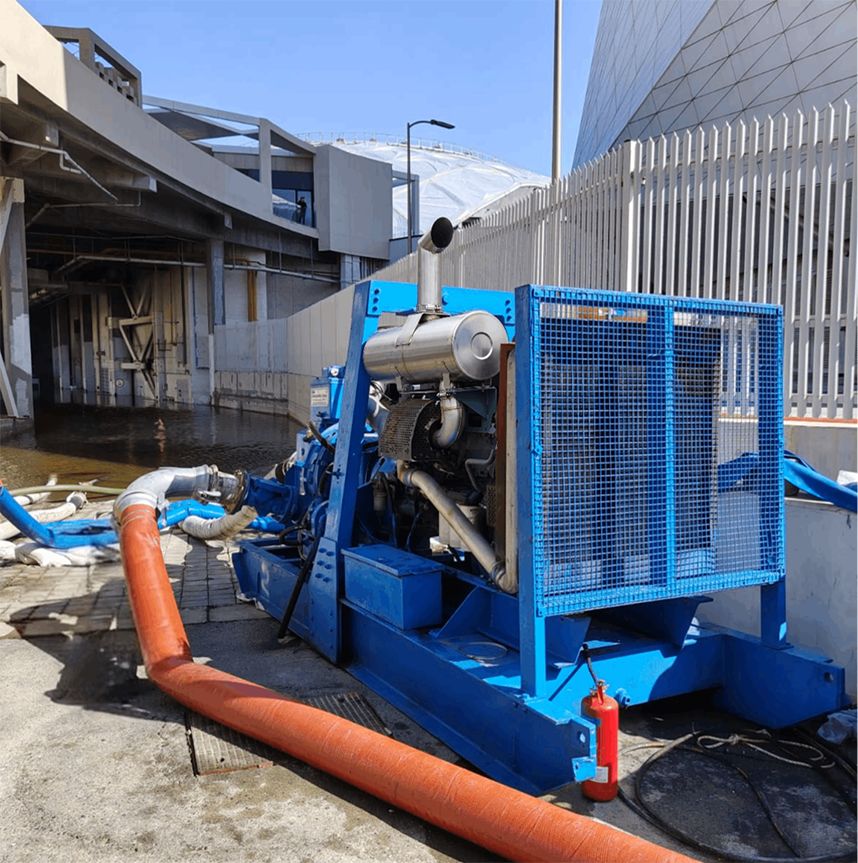
GP 150M (6’’ Diesel Sump Pumps)
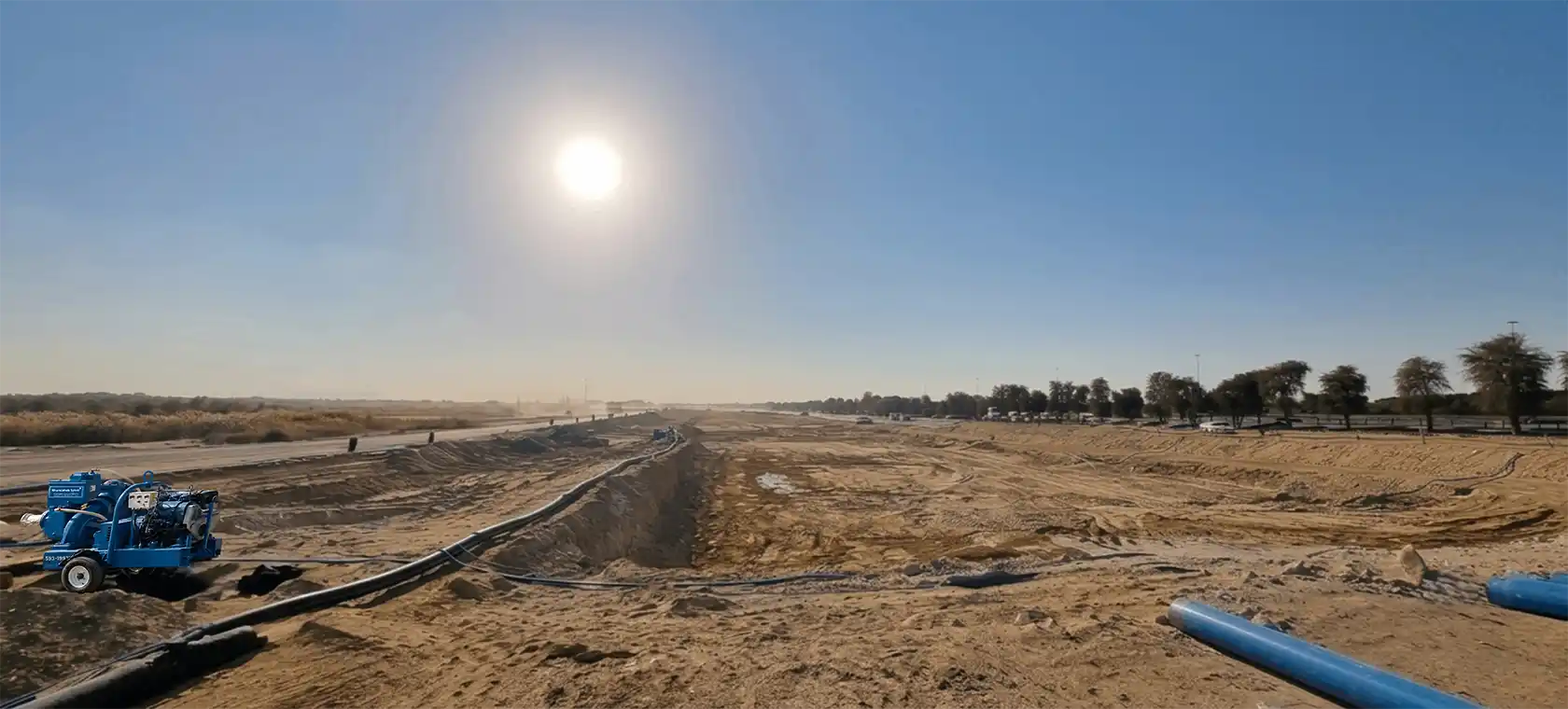
3 x GP150m units were deployed to manage localised over-bleed from clayey strata.
WP 150-60
Two further units supported sump pumping operations: 1 x WP 150-60, a 6” dewatering pump, and 1 x Wispa, a 6” booster pump extending discharge distance where needed, adding flexibility to manage localised inflow variation across the site.

Maintaining Groundwater Control Through Variable Ground
Sewer and stormwater network construction, pumping station works, and lifting station works are all proceeding inside the excavation as planned. The ground challenges encountered have been addressed at most locations using Khansaheb Sykes’ dewatering expertise, with additional measures applied where ground conditions required them, and the project is progressing well and on schedule.
At Khansaheb Sykes, we design every dewatering system around the ground it actually has to work in – this project’s fines migration and over-bleed challenges are one example of that engineering approach in practice.
Download Case Study
 |
Download Case Study: Khansaheb Sykes Delivers Dewatering for Meydan Horizon & Eastern Extension, Dubai |
|---|


Need Dewatering Engineered Around Your Site’s Actual Ground Conditions?
|
Khansaheb Sykes can help you plan a dewatering approach matched to your site’s ground conditions.
Call our team on 00971 800 79537 to talk through your site conditions, or enquire now. |
|---|
FAQs
Why is filtration necessary alongside pumping in fine-grained ground?
Pumping alone doesn’t stop fine particles entering the system. Properly graded filter materials and filter screens hold back silt and sand while still allowing water through.
What causes over-bleed conditions in clayey ground?
Over-bleed occurs when water continues to seep from clay layers after the surrounding ground has been drawn down – a direct consequence of the site’s stratigraphy.
Why use a combined deep well and sump pumping approach?
Deep wells provide sustained drawdown; sump pumps handle residual water closer to the surface. Combining both addresses more than one ground challenge at once.