

 United Kingdom
 Ireland
 Canada
Flow rate and head get a pump onto the shortlist. They don’t tell you if it fits, connects to the fittings installed, or arrives fast enough. That’s especially true for submersible pump selection, whether the duty is groundwater, wastewater, sewage, or sludge.
Khansaheb Sykes selects pumps against the real constraint, standard practice across our UAE pump hire work, backed by 24-hour support and rapid mobilisation from depots in Sharjah, Dubai, Abu Dhabi, and Ruwais.
When Physical Space is the Limiting Factor
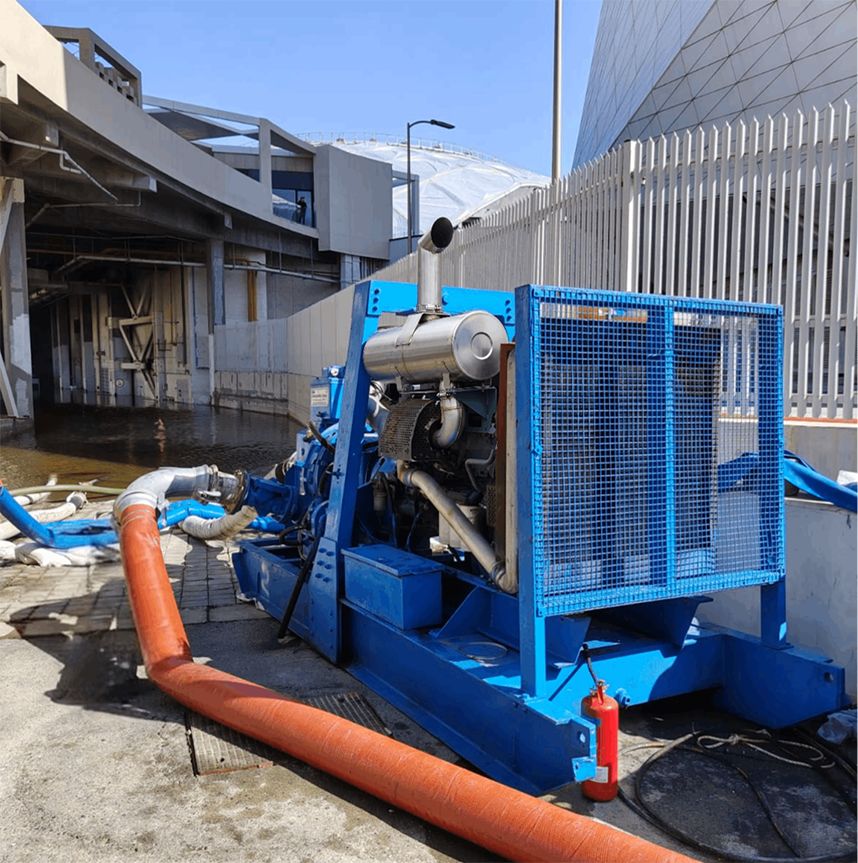
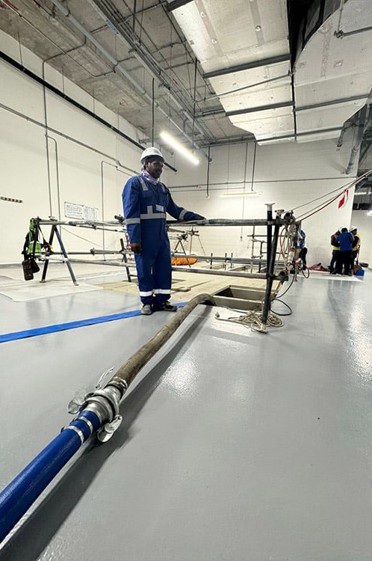
Sometimes the constraint isn’t the water, it’s the room to work. During How Khansaheb Sykes Provided Overpumping Services for Major Waterpark During Essential Maintenance, we had to remove 180 m³ of salt water from a confined basin within a 4-hour operational window.
The working space made the standard approach impossible:
- The sump pit for pump installation measured only 500 x 500mm.
- The main pipeline ran directly through the middle of the chamber.
- Manoeuvrability inside the space was severely restricted.
We selected a Tank 355 Submersible Drainage Pump specifically because, at 306mm in diameter, it was the most suitable unit for the available space. The pump wasn’t chosen for flow rate alone, it was chosen because its footprint matched what the job needed.
Before specifying any submersible pump for a restricted chamber, the dimensions that matter most are the clear opening width and length, the depth to invert, and any pipework or bracing already occupying the space. A standard-bodied pump can fail on any one of these points even when its duty point is otherwise correct. An impeller housing too wide for the opening, or a motor casing too long to submerge fully in a shallow sump, simply won’t go in, regardless of flow rate.
This is why Khansaheb Sykes’ submersible fleet spans multiple body diameters, from compact drainage units through to larger high-capacity models, so the physical footprint can be matched to the chamber rather than forcing one standard size onto every job.
Heavy-duty and confined-space duties are treated as separate specification questions from the start, not adjustments made after a pump arrives and doesn’t fit. A unit correctly sized for a heavy-duty, high-solids application isn’t automatically right for a restricted chamber, and a compact-diameter pump chosen for its footprint still has to meet the duty’s flow and head requirements. Getting both right together, not treating diameter as an afterthought, is what a proper site assessment resolves before equipment is committed.
| Related Reading: |
|---|
When Fitting Configuration Rules Out the Standard Setup
Space isn’t the only constraint. Sometimes the fittings on-site dictate what can connect.
During Khansaheb Sykes Assists with Chilled Water Network Flushing on Reem Island, Abu Dhabi, our task was high-volume flushing to meet flow and velocity requirements, using pipes supplied by the client.
The flange inlets were positioned 0.5 metres apart, against a standard assumption of 2 to 3 metres. That gap meant a different high-performance pump configuration was the only way to hit the required flow and velocity, not a bigger pump.
When Time Pressure Decides Equipment Choice
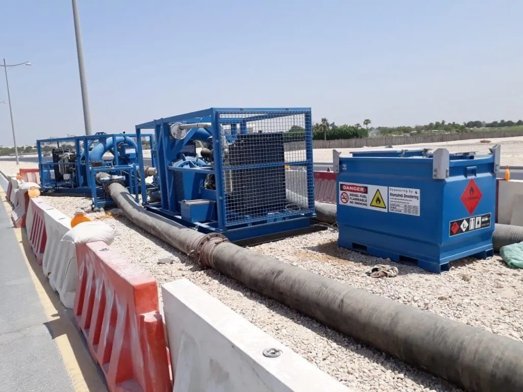
Some constraints aren’t physical, they’re the clock. In Khansaheb Sykes provides Emergency overpumping for Sewage Network, a main contractor needed emergency overpumping, and response time decided what we mobilised.
We deployed diesel-driven pumping equipment, rated to 1,450 m³/hr and 45 metres head, with bunded fuel tanks and accessories. Diesel drive was right because it needed no electrical supply. Response started immediately, backed by our 24-hour, 365-day service.
Sewage and sludge duties add a further layer. Solids-laden flow needs equipment built for it, which is why Khansaheb Sykes offers a dedicated sewage overpumping service, pairing diesel backup with submersible sludge pumps for solids-heavy applications.
| Related Reading: |
|---|
Which Submersible Duty Fits Your Site?
| Duty Type | Fluid Handled | Typical Site Fit |
| Drainage | Clean or lightly silted groundwater | Confined chambers, restricted sump pits, standard construction dewatering |
| Wastewater | Wastewater with some solids content | Sites needing cost-efficient pumping at higher flow rates |
| Sludge | High-solids or high-viscosity flow | Sewage networks, digester tanks, solids-heavy applications |
Pump Applications for Site-Specific Constraints
Selection is specified against the constraint itself, not a standard package:
- Confined-space applications: compact submersible pumps sized to fit chambers where a standard pump won’t go.
- Custom-configured connections: high-performance pumps configured to fittings supplied on-site.
- Rapid-response mobilisation: diesel-driven pumps not dependent on grid power.
- Wastewater and sewage duty: submersible wastewater pumps built for solids content.
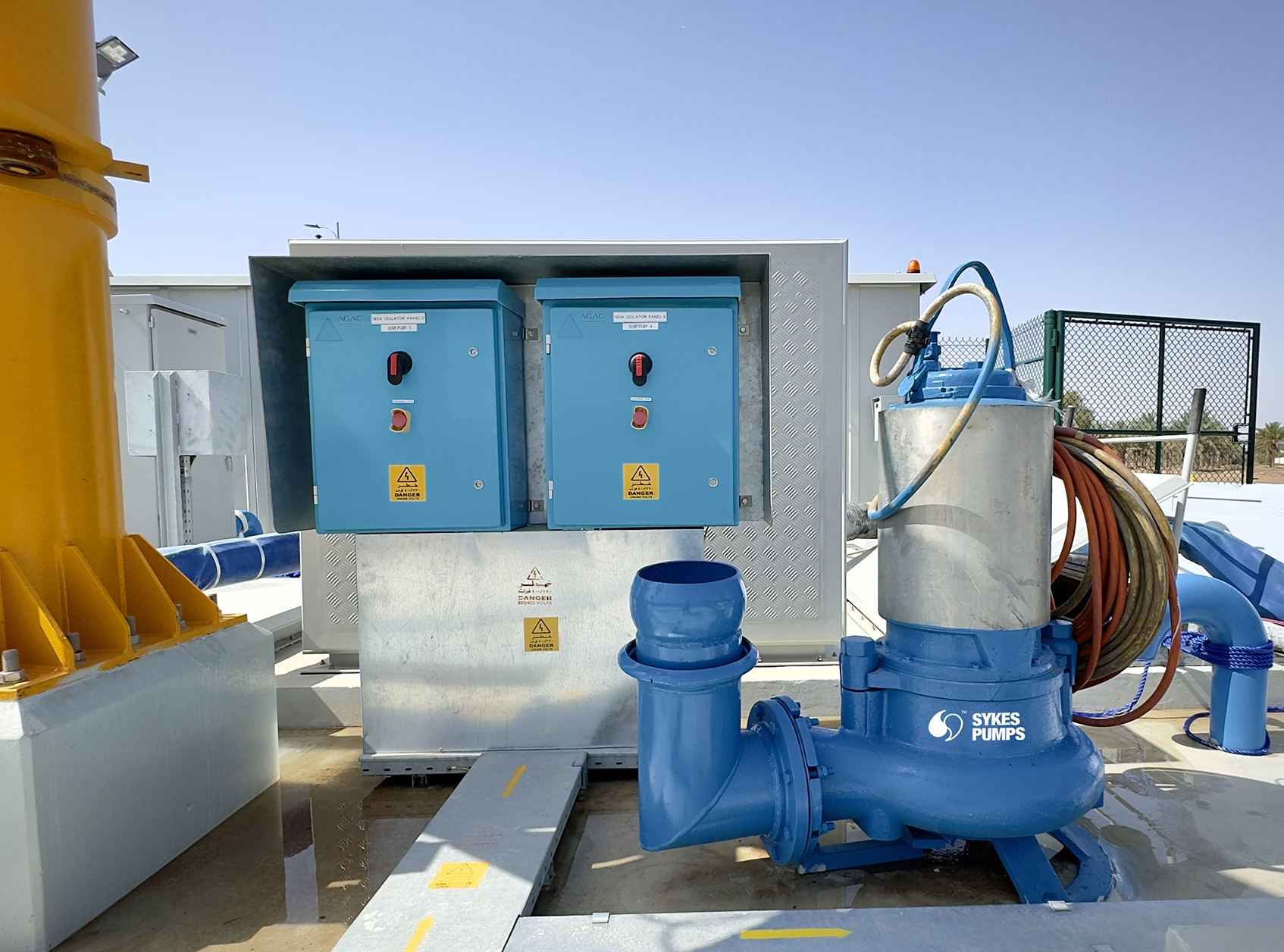
Matching application to constraint is core to Khansaheb Sykes’ pump hire work across the UAE.
Briefing a Pump Requirement
The faster a site’s actual constraints reach us, the faster the right equipment reaches site. Before contacting our team, it helps to have ready:
- The fluid type: groundwater, wastewater, sewage, or sludge
- The required flow rate and head, if known
- The physical dimensions of the installation point: chamber size, access opening, depth
- Any fittings or connections already installed on-site
- Whether grid power is available, or diesel-driven equipment is needed
Where any of this is uncertain, Khansaheb Sykes offers a free site survey to confirm the real constraints before equipment is specified. A survey covers the same points above, verified on-site rather than estimated, so the pump that turns up is the one the job actually needs, not one that has to be exchanged later. The site decides the equipment, not the other way round, and that decision is made before mobilisation, when it’s still cheap to get right.
Results of Constraint-Led Pump Selection
Compact submersible units solve space constraints standard pumps can’t fit into. Non-standard fitting spacing gets the right configuration. Diesel-driven units keep response independent of grid connection. Selecting against the real constraint avoids equipment not fitting the job.
These outcomes hold on live UAE projects, documented below.
| Related Case Studies: |
|---|
Talk to Our Team About Site-Specific Pump Selection
| Khansaheb Sykes selects pumps against your site’s real constraints, on rapid standby from UAE depots, backed by 24-hour, 365-day service. Ask about our free site survey. Speak to our team today on 00971 800 79537 to discuss your project requirements or enquire now |
|---|
FAQs
What type of pump is best for sewage?
A purpose-built submersible sewage or sludge pump, engineered to handle solids-laden flow without clogging or premature wear, is the right choice, not a standard drainage unit. Khansaheb Sykes has deployed submersible sewage units, backed by diesel standby power, on live UAE network diversions where a conventional pump couldn’t cope with the material.
What is the purpose of a sewage pump?
A sewage pump moves wastewater containing solids from one point to another, typically from a chamber, manhole, or live network into a treatment plant or an alternative discharge point, without blocking on the material it’s handling. This keeps a network operational during maintenance, repair, or capacity work, without allowing overflow or backup.
How is a submersible pump selected when site space is restricted?
The pump is matched to the physical dimensions of the working space first, chamber size, access opening, and depth, with a compact-diameter unit specified where a standard-bodied pump won’t fit, rather than defaulting to flow rate alone. Confirming these dimensions on-site, before equipment is chosen, avoids arriving with a pump that simply won’t go in.
What determines the cost of submersible pump hire?
Cost depends on the duty required, the hire duration, and the site conditions the pump has to work within, not a fixed rate per pump. Restricted space, non-standard fittings, or solids-heavy fluid all affect which equipment is needed. A free site survey establishes these factors properly before a quote is given, rather than pricing against assumptions.
How quickly can pumps be mobilised across the UAE?
Khansaheb Sykes operates depots in Sharjah, Dubai, Abu Dhabi, and Ruwais within the UAE, part of a wider network of 10+ depots across the Middle east, with 24-hour, 365-day service. This coverage allows equipment to be mobilised rapidly regardless of which emirate the site is in, without waiting on stock to be transferred from elsewhere.


