 United Kingdom
 Ireland
 The Netherlands
 Belgium
 Italy
Italy Germany
 Luxembourg
 Switzerland
 Canada
 Middle East
 Saudi Arabia
 Bahrain
 Oman
Oman Kuwait
 Qatar
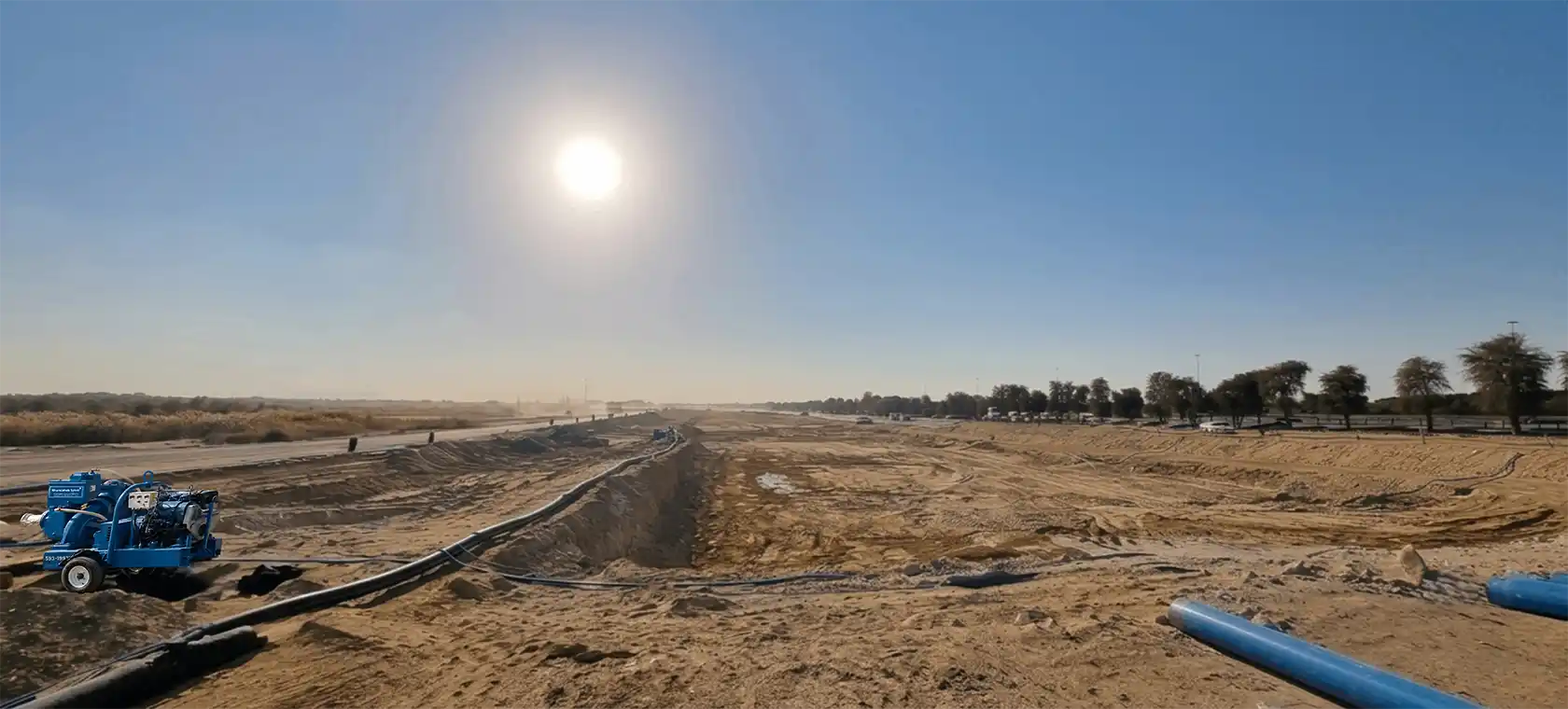
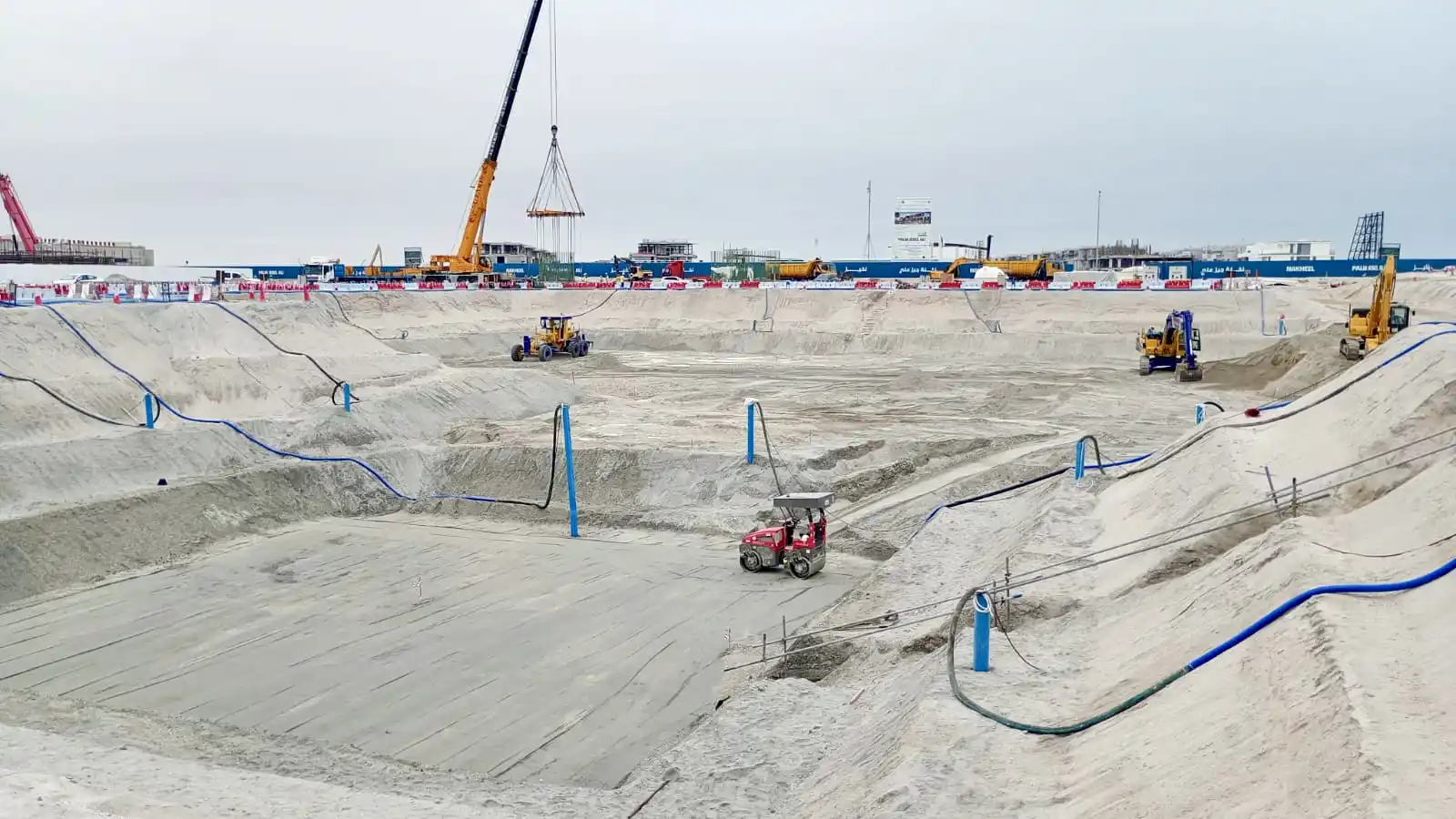
QatarManaging large-scale dewatering in Dubai across a major coastal infrastructure programme in Jebel Ali, Dubai, demanded more than standard dewatering practice. The site is underlain by highly permeable shelly sand with a groundwater table in direct connectivity to the sea, making water levels shift with every tidal cycle. All excavations were carried out without watertight shoring, placing the entire burden of excavation stability on the active dewatering system.
Khansaheb Sykes designed and operates an integrated deepwell, wellpoint, and sump pumping solution across the programme, and has to date successfully dewatered 70% of the project area while keeping all active excavations stable and accessible.
Why Was Groundwater Control So Demanding on This Site?
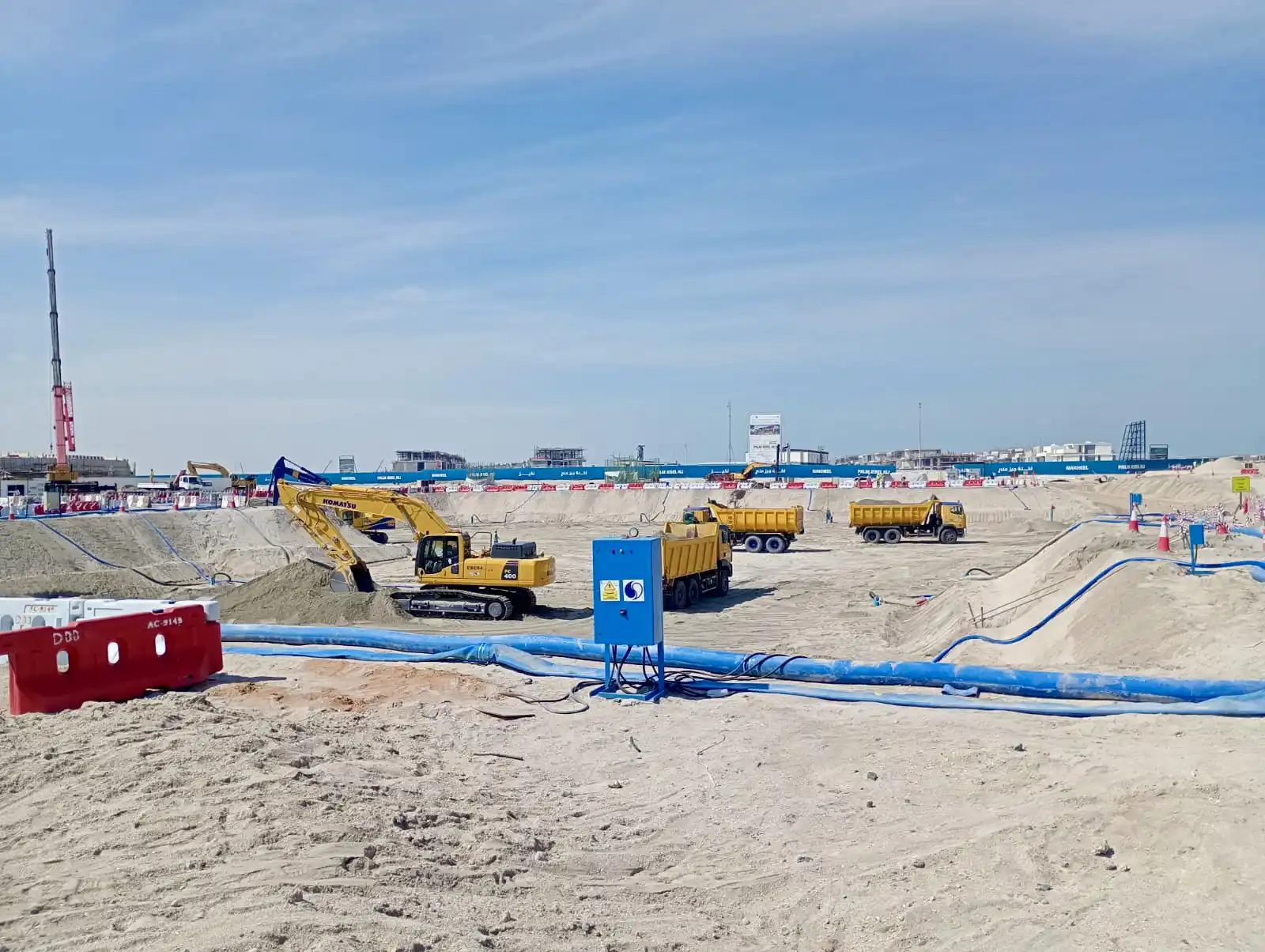
Shelly sand offers virtually no resistance to groundwater movement and recharges rapidly the moment pumping output drops. Combined with a groundwater table in direct connectivity to the sea, water levels across the site fluctuated continuously with each tidal cycle, making a fixed drawdown target impossible to maintain.
Without watertight shoring, the dewatering system was essential for maintaining stable excavations across all active work fronts. Similar conditions were encountered during our Dewatering Operations for Stormwater Line Installation at Yas Bay Beach, Abu Dhabi, where direct hydraulic connectivity to the sea required an integrated dewatering solution.
Key site challenges:
- Highly permeable shelly sand – rapid recharge under any reduction in pumping output
- Direct sea connectivity – continuously fluctuating groundwater levels with each tidal cycle
- No watertight shoring – full hydraulic load carried by the active dewatering system alone
- Multiple concurrent work fronts at varying depths and stages
How Did Khansaheb Sykes Manage Groundwater Across the Site?
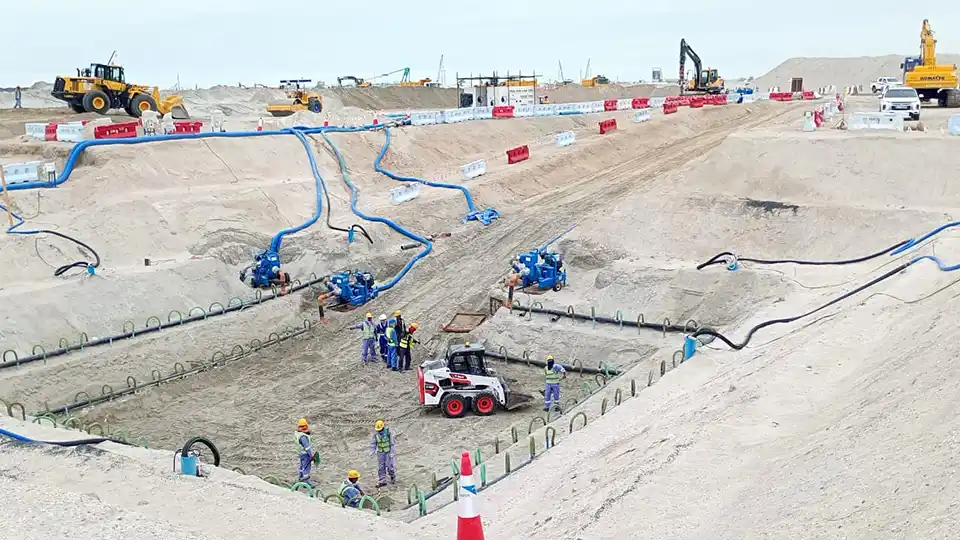
Khansaheb Sykes implemented a combined deepwell, wellpoint, and sump pumping strategy, with each technique matched to the specific requirements of different structure types and pipeline reaches across the site.
Equipment deployed
| Equipment | Quantity | Role |
| GP150M General Purpose Pumps | Up to 100 units | Surface and trench dewatering across all work fronts |
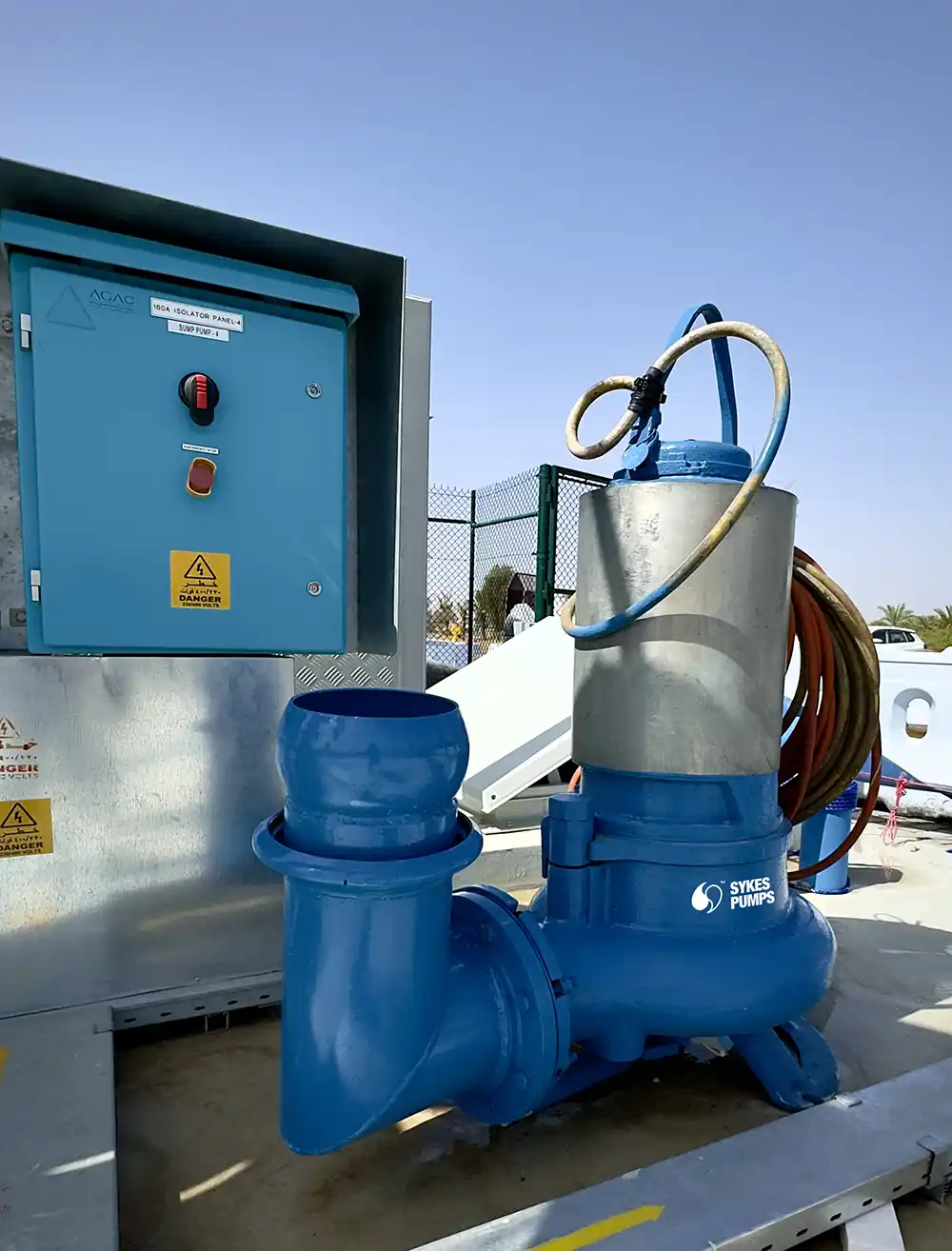
| Submersible Borehole Pumps | Up to 13kW | Sustained drawdown within deepwells |
| Generators | 60-200kVA fleet | Uninterrupted power supply across all work fronts |
Deepwells addressed the deeper structure excavations. The wellpoint system covered the pipeline trenches, with approximately 10 km installed across the site. Sump pumping intercepted residual inflow at the excavation base level. All three techniques ran concurrently, managed and maintained by the Khansaheb Sykes team throughout. Khansaheb Sykes’s experience in coastal and marine-adjacent dewatering was central to the design and operational management of the system at this scale.
Key Equipment
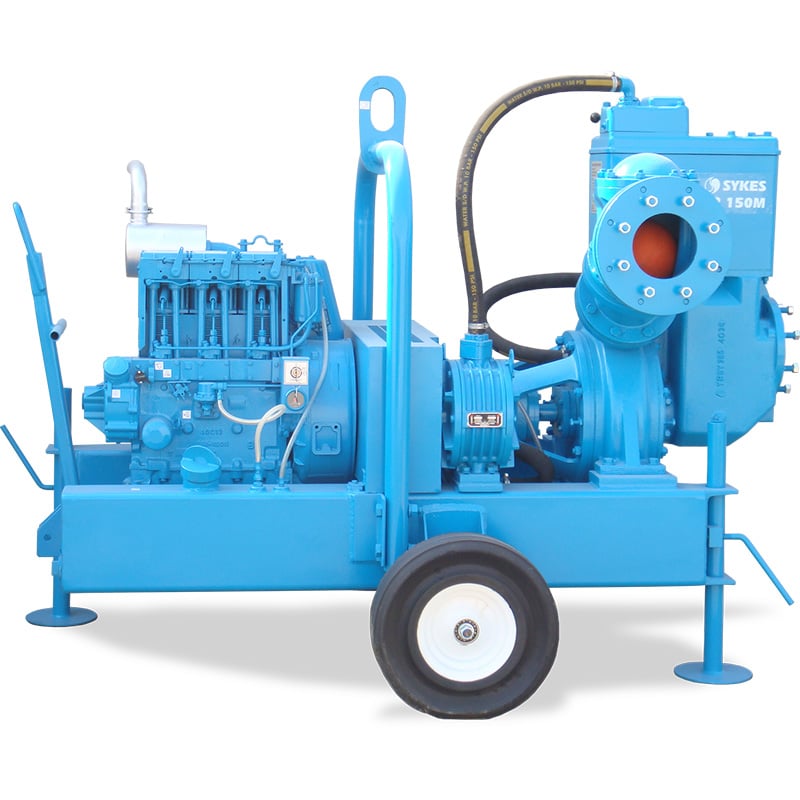
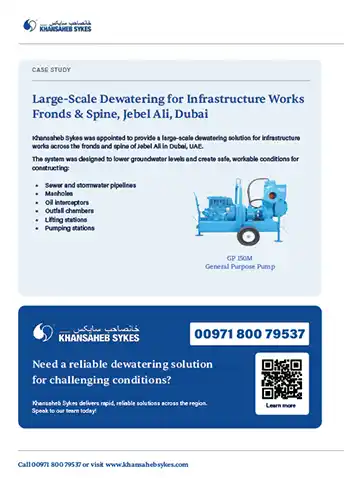
GP 150M General Purpose Pump
The GP150M’s Univac vacuum system enabled fully automatic re-priming from dry essential on a tidal site where any pumping interruption triggers immediate groundwater recharge.
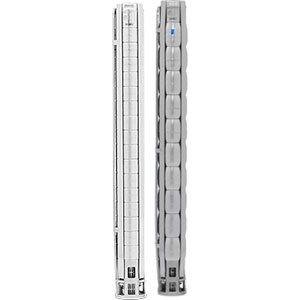
Submersible Borehole Pumps
Submersible units rated up to 13kW, providing sustained high-volume drawdown within the deepwell network across the site.
Delivering Reliable Dewatering Across Complex Infrastructure
The project is ongoing, with completion scheduled for December 2026. To date, 70% of the project area has been successfully dewatered. Excavations across all completed work fronts have remained stable and accessible, with no unplanned flooding or programme disruption recorded. The system has operated continuously in a demanding open-cut coastal environment, without any passive containment in place. This project reinforces Khansaheb Sykes’s capability as a specialist in large-scale infrastructure dewatering across the UAE.
Download Case Study
 |
Download Case Study: Large-Scale Dewatering: Fronds & Spine, Jebel Ali, Dubai |
|---|
Need Expert Support for Dewatering Projects?
|
Khansaheb Sykes delivers reliable dewatering expertise across complex construction environments.
Speak to our team today on 00971 800 79537 to discuss your project requirements or enquire now |
|---|
FAQs
What is the difference between deepwell and wellpoint dewatering?
Deep well dewatering uses submersible borehole pumps within cased wells for sustained drawdown at depth, suited to deeper structure excavations. Wellpoint dewatering uses closely spaced shallow points along a header pipe, effective for shallower linear pipeline trenches.
Why are generators critical on a tidal dewatering site?
Any interruption to pumping in permeable coastal soils causes immediate groundwater recharge and risks excavation instability. A dedicated generator fleet ensures the system operates continuously, independent of grid availability.
Can dewatering be carried out effectively without watertight shoring?
Yes, but it requires greater pumping capacity and operational expertise. Khansaheb Sykes has extensive regional experience in exactly this type of open-cut coastal dewatering.